A Perfect Storm – Insurance Agent Errors and Omissions Claims Continue to Grow
How The Right Expert Witness Can Help You Prevent and Defend Agency E&O Claims
The last few years have shown insurance agents and their errors & omissions (E&O) insurers one thing – even long-time, valued customers can present a significant liability exposure if an agent makes a real or perceived error when placing coverage or servicing the account. According to an article in Insurance Journal, many factors have driven an increase in agency E&O claims. These factors causing Insurance Agent Errors and Omissions Claims to grow include the following.
- Staffing challenges including turnover and increased workloads
- Lack of training
- More suits filed by carriers against their agents
- More business going into surplus lines, where coverage forms may not be as robust as ISO forms
Additionally, societal factors continue to complicate claims handling. These include the following.
- COVID-19 and its supply chain and inflationary spirals
- Escalating jury verdicts
- Remote workers reluctant to return to the office and distance workers in other states
- Understated property values and coverage amounts
- Inadequate rate adjustments by resolute departments of insurance
All these factors have increased the risks to today’s insurance agents and their E&O carriers. In turn, insurers scramble to set adequate rates given larger and emerging risks, or pull out of markets entirely, which adds to public anger toward insurers. Today’s agents are caught in that crossfire.
Expert Witness on Both Sides of Insurance Agent Errors and Omissions Claims
Agency E&O insurance is a critical safeguard against negligence claims. Hiring the right expert witness in a negligence case can mean the difference between a defense verdict and an adverse policyholder judgment.
I’ve been an expert witness on both sides of agency errors & omissions (E&O) claims for twenty years. In my time testifying on agency professional liability claims, I’ve also become a trusted adviser to many attorneys, agency owners and E&O claims professionals. I know that although the standard of care varies by state, in the end, the successful defense of any agency E&O claim largely depends on the expert and how well that expert communicates to a jury.
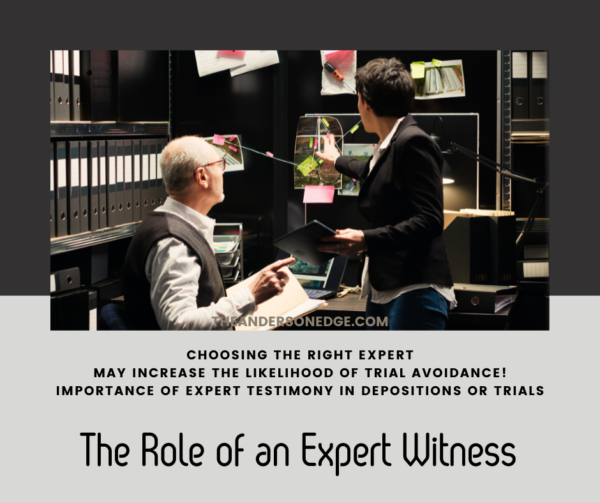
As many legal experts state, deposition stage is the new arena for litigation, where the majority of cases resolve prior to trial. And since the litigation arena in most E&O claims lies in how well experts perform in depositions, not a trial, guidance in the defense and a strong deposition performance by your selected expert increases the likelihood of trial avoidance.
This article will review some of the top allegations in agency E&O claims, and how you as a litigation adjuster or an attorney can choose the right expert for the majority of agency E&O claims.
In a graphic in the May/June 2024 issue of News & Views newsletter of the Independent Insurance Agents and Brokers of Arizona (Big “I” Arizona), these were the top five agency E&O claims experienced by Arizona agencies.
- Failure to offer a specific coverage
- Failure to offer higher limits
- Risk assessment failures
- Overpromising on the agency website
- Application errors
In our E&O expert witness practice, we frequently testify in these types of claims. Defending them is sometimes easy. That state’s standard of care may not be as demanding as another state’s standard. Eventually, however, if counsel cannot get the suit dismissed in its early stages and a case goes to the jury, the jurors may ignore the duties outlined in statutory or prior case law.
You can learn more about insurance agent and broker standards of care at our website links, including a survey outlining the Bad Faith Standards of Care for each state.
Avoid the “Hired Gun” Hammer
Your expert should have experience testifying for both plaintiff and defense cases. To avoid the “hired gun” allegation, your expert should offer both the pros and cons of any case they evaluate. The best words you can hear from your expert before retaining them if you attempt to guide them in a conclusion is, “I’ll have to look at the documentation before I offer an opinion.”
If your expert’s testimony has been heavily weighted toward more plaintiff or more defense work, it may be best to avoid that expert. In short, your expert should be unbiased and be willing to provide you with a case analysis that is logical, understandable to a jury and based on a review of the evidence.
Agency E&O Claims with High Verdict Potential
Some problems in today’s E&O litigation can occur when one mistake generates a significant verdict. Additionally, especially for agents who “niche” market, for example, agents who work almost exclusively with contractors or upstream oil contractors, and rely heavily on referrals from their niche insureds, a reputational fallout from one mistake can devastate the agent’s revenue after an adverse coverage fallout.
From leaving a commercial vehicle off a policy to a gap between the needed liability limits and the limits the excess policy requires, these errors can generate a great deal of liability. Similarly, consider the insureds who, in the course of their business operations, experience a catastrophic injury to a youngster as a result of a child playing on unsecured mobile equipment. Failure to offer higher limits, and document any rejection of that advice, can significantly damage your defense of that claim.
The number one rule of agency procedures is in the documentation. But what if the agent documented a rejection of higher limits three years ago but had nothing on file that offers recent documentation? Or what if the documentation sent to the insured did not include these important words: “I understand this rejection applies to all future renewals”?
It then becomes the agent’s word against the insured’s, something no attorney wants to rely on to defend or prosecute the case. And we cannot assume an existing client, even a long-term one, will forgive a mistake. That is no longer true, even if that mistake involves an agent’s close friend or a relative.
Where in the Transaction Do Errors Frequently Occur?
The majority of E&O claims occur during a new business transaction with either a new or an existing client. Because many carriers have non-renewed even long-time accounts, the new carrier will require an application and often supplemental apps. Application errors can complicate any E&O claim, even when the insured has signed that application.
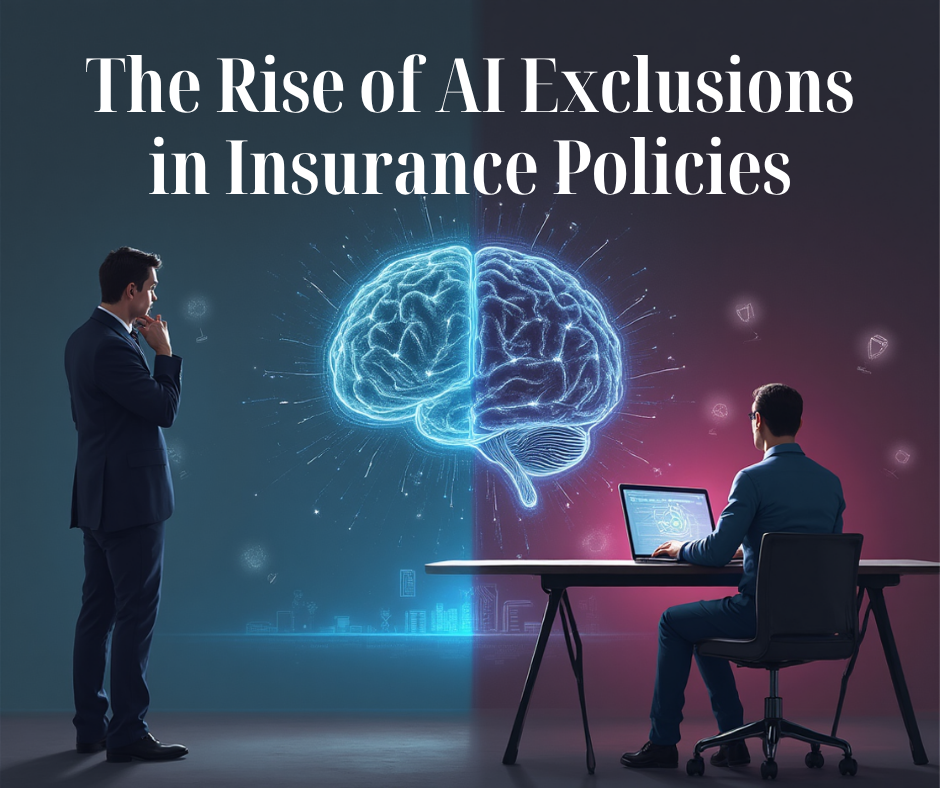
The heavy use of artificial intelligence (AI) to check documents can significantly impact litigation. Consider this deposition question from opposing counsel: “So you’re telling me you as the broker on this account never personally reviewed this renewal policy? Who did review it?” The agency representative’s answer is often, “We outsource and streamline certain processes, which allows us to focus more heavily on [coverage] [client loss prevention] properly supporting our clients.” However, what a jury will hear is, “We get it, you focused more on producing new business than serving your current clients.”
How AI May Affect Insurance Agent Errors and Omissions Claims
While AI can save agents time and may improve the accuracy of policy documents, too much reliance on AI can be detrimental when defending an E&O claim.
While there is no denying AI use for routine tasks such as issuing certificates and checking renewal documents will increase, the use of AI that involves an E&O claim makes it harder for your legal team to personalize the agency and its principals. Painting a picture of your agent, perhaps a family-run business or a specialty firm, is the main task of today’s legal counsel to try to avoid extremely high verdicts.
According to one Midwest agent, a heavy producer of crop insurance, “You used to be able to count on carriers to ‘get it right’ in policy issuance.” This is not always the case as carriers face the same talent crunch challenges all businesses must manage in today’s highly competitive labor market. Additional challenges include work-from-home issues and the draining of top talent by luring your clients’ highly experienced employees away by offering a higher salary, remote work and customized benefit plans.
In short, today’s agents face significantly more errors at policy issuance and renewal. Renewals generate many claims. Agents may feel more relaxed at renewal, believing “We got it right when we initially bound coverage.” However, my experience as a bad faith and E&O expert witness tells me otherwise. Additionally, when a producer relies on previous coverage provided by the former agent with a new client, and perhaps fails to offer important endorsements or higher limits, E&O claims may arise.
Incomplete vehicle and property schedules, failure to update building limits, failure to offer coverage such as flood insurance, and inadequate limits of business income cause many errors. While AI may help solve those problems, the jury is certainly still out.
What Activities Generate the Most E&O Claims?
Mid-term policy changes generate many E&O claims. Agents should focus on several key areas when discussing coverage with the insured.
- Your agents should be certain they understand what the client is trying to accomplish with the request. Not thoroughly discussing the results of changes, for example taking a self-insured retention (SIR) rather than a deductible, can mean the client takes a badly misunderstood hit after a loss when they must pony up the SIR.
- COVID-19 drastically changed revenue sources for many businesses. For example, contractors who mainly complete service and repair work may have derived the majority of their income during COVID from remodeling work. This may present a significant change to the exposure, a change the underwriter finds no longer meets the carrier’s coverage intent or the existing class code.
A Few Examples of Activities That Can Generate Insurance Agent Errors and Omissions Claims
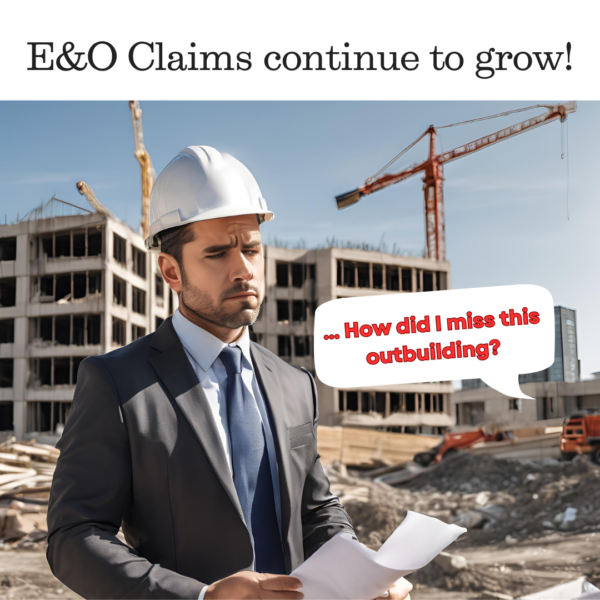
- Even a producer’s site visit can generate problems. For example, suppose the agent does a walk-through with the insured. The agent doesn’t bring the property schedule, and the insured has built a new outbuilding. However, even though the insured has a duty to review the policy and any schedules, the frequent E&O allegation in this type of case is, “You were on site; you should have seen the new building!”
- Failure to offer coverage specific to the insured’s exposures is one of the most frequent causes of agent E&O litigation. Documentation of coverage the agent offers, including endorsements that could enhance coverage, increase limits, and increase property values can all help protect the agent and make any E&O claim much easier to defend.
- Similarly, furnishing the insured with a signed declination of coverage when the agent offers a specific coverage, such as flood coverage on a property policy, can help prevent an adverse verdict when the insured alleges the agent “never recommended that coverage.” These declinations should be in writing and include the words, “This declination applies to all future renewals.” Even if the insured fails to return the declaration, proof that the agent sent that document could help defend an E&O claim on failure to offer.
Agency E&O by Agency Size
According to one agent E&O carrier, almost half their claims arise in agencies with staff sizes of 11 to 30 employees, followed closely by those agencies staffed from three to five employees,
Breaking down E&O claims by gross annual premium, the bulk of claims arise in agencies with under $5 million in premium volume followed by agencies with $5-to-$10 million in premium, according to recent data by one E&O insurer. However, these claims can occur in any size agency.
Insurance Agent Errors and Omissions Claims and The Pending E&O Bubble
Recent mergers and acquisitions (M&A) have also impacted E&O claims. When buying an agency, the acquiring entity will review resumes, check for credentialing such as agent licensing, and review employee performance standards. However, the smaller the acquired agency, the more likely the agency may rely on a few key agents who may not be familiar with best practices procedural standards, or in some cases, simply will not adopt the acquiring entity’s procedures and standards.
Smaller agencies may not have a standard procedures manual, or acquired agents may suffer from the “This is the way I’ve always done it” thinking. The industry is beginning to see more significant claims arise out of acquisitions. Certainly, agency E&O insurers are closely watching this trend.
Additionally, prior acts committed by the acquired agency can involve the current carrier depending on the structure of the agency sale.
During the M&A, it can pay to hire a trusted adviser to help provide insight and guidance throughout the acquisition process. For more information on the future and risks of agency acquisitions, read our article in the American Bar Association’s newsletter.
Marketing Collateral a Key Area of Concern in E&O Claims
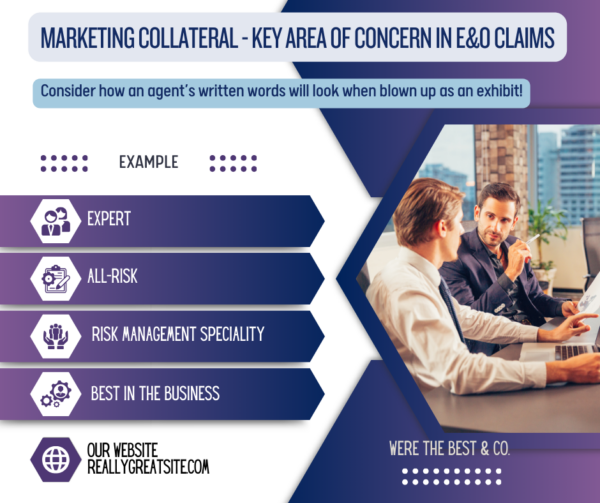
Whether it’s an agent’s website or marketing material handouts, or even job titles, all can increase the agent’s standard of care, often beyond what that state requires. Common problematic terms include use of words or phrases such as “expert,” “best,” “all-risk,” and “risk management specialty.” Opposing counsel will use those terms in litigation, making defending an E&O claim harder. Always consider how the agent’s written words will look when blown up as an exhibit.
Today’s insurance sales experts increasingly recommend and focus on niche marketing. Rather than be generalists, they recommend agents develop a niche and saturate that market. Especially when niche marketing, insureds rely more heavily on niche producers to solve risk management issues such as safety concerns or help to develop return-to-work programs, for example. If that reliance on the agent’s declared expertise becomes detrimental to an insured, any assurance, whether written or oral, can expand the agent’s standard of care.
Agents must use precise language that confirms their experience. Calling oneself a “risk management expert” without proper education and experience can backfire.
Carriers often seek to file motions for early claims dismissal. Suppose website or marketing materials such as landing pages or handouts expand the insured’s service expectations. In that case, it makes it much harder for the carrier to successfully conclude the claim early.
E&O Prevention Tips to Consider
While occurrence policies generate more claims than claims-made forms, probably because they are more prevalent, any agent placing claims-made coverage must explain the importance of policy terms and conditions. Once an insured cancels claims-made coverage, there is generally no coverage for past activities. Because many business owners are selling their businesses and retiring, the importance of ensuring business owners understand they may still face liability on their completed operations or products they manufactured or sold is critical and not well understood by many commercial clients.
Any size agency is at risk of a claim and all of the following errors can trip up even experienced agents.
- Failure to recommend adequate coverage limits to the insured. Using coverage rejection forms that include wording such as “This rejection of coverage includes future renewals” can help avoid E&O claims from a failure to recommend.
- Negligent misrepresentation allegations may occur if an agent fails to take reasonable steps to inform their insureds of any information that may be detrimental to them. For example, the hard market has caused many insurers to add new policy exclusions or warranties. Failure to warn an insured that if they fail to keep their security system operable they may have no property can generate a large E&O claim after a claim denial. Another key example of negligent misrepresentation occurs when a new agent woos a client by telling the client, “Our coverage will be better than what your current agent/carrier provides.” It is one thing to sit down with a potential client with a checklist that shows gaps in their current coverage versus what another carrier can provide, it’s another to make vague promises or denigrate the competition’s expertise.
- Untimely notice of a claim to the carrier can generate claims. Often insureds call their agents to report an incident they don’t want to report to the carrier. On first-party property claims just above the deductible, an agent may recommend the insured pay the damage themselves. However, agents should review their agency/carrier agreements to determine their claim-reporting duties before advising insureds to handle any issue themselves. And agency risk management experts agree: On liability claims, the agent should always advise the client to report the claim and document that advice. Further, no longer can agents assume that the underlying carrier will appropriately put the excess carrier on notice on high-value claims. One recent court decision left a hole in the liability tower because the primary carrier failed to report the claim to all excess-layer insurers.
- Certificates of insurance (COI) that promise the world are a litigation nightmare. When lenders or risk managers demand certain all-encompassing language in certificates, agents beware. Insurance associations spend a great deal of time educating agents on the hazards of too broadly worded COIs; however, claims still arise. Agents are reluctant to say “no” to an insured if their refusal to place certain language on a COI stalls a deal for the insured. However, COIs with too broad wording are a constant hotbed of litigation.
- Reviewing anything on insured contracts other than insurance requirements can set the stage for an agency E&O allegation. Agents are not lawyers, and although they routinely review leases and other agreements for their insureds, they should never stray outside the insurance requirements to avoid an E&O allegation.
General E&O Issues to Consider
With today’s extremely hard market, carriers are becoming more selective in which accounts they will write and imposed stricter coverage terms in many instances.
More business goes to surplus lines carriers than ever before. Surplus lines carriers often use proprietary forms, and usually offer more limited coverage than many admitted carriers. Agents must read the forms, explore endorsements, especially vaguely worded endorsements, and alert their insureds about these exclusions or coverage limitations. Surplus lines agencies usually access managing general agencies (MGAs) to which carriers delegate underwriting authority. For more information on MGAs, please see our article, Navigating the Managing General Agency Agreement.
Insurers that offer agency E&O coverage seem well prepared for claims arising out of the hard market. Many offer tools to help their insureds improve processes and reduce their exposure to E&O claims. Additionally, industry associations like the Big “I” offer many risk reduction tools for their members, many open to all Big “I” members.
Thoughts in Closing
The insurance market is not going to soften significantly any time soon. Coverage availability, more business placed in the surplus lines market, and the reality of plaintiff litigation funding all help to create larger verdicts. These are just a few challenges facing today’s agents and E&O carriers alike.
Here are a few additional items agents should consider.
- Are the agency’s E&O limits adequate? Agents should never recommend a coverage limit to their insureds. However, it’s a solid idea to recommend that agents review their current agency E&O verdicts to evaluate E&O coverage limits that help them determine their “sleep at night” coverage limit.
- Every agency should have an agency procedures manual, and all producers and customer service representatives should adhere to those guidelines. Rely on current agency best practices recommendations available through state or national industry associations. No matter how much premium they generate, rogue producers who refuse to adhere to standards create significant E&O problems. While agency owners may be reluctant to fire employees, they are also reluctant to pony up often sizable deductibles if one employee creates an E&O incident.
- With the hard market still a reality, agents often work harder to find adequate coverage for their insureds. Agencies must proactively attempt to find alternative coverage and where they cannot, immediately inform the insured verbally and in writing that they cannot find a market. They must also closely review policy language, including endorsements, and notify the insured of any significant changes, coverage conditions, or limitations.
Whether presenting an agency E&O claim or defending one, work with an expert witness who understands the challenges faced by today’s agents. Experts must provide testimony in a highly understandable way, a way in which the jurors will decide, “We believe and like this witness.” This is critical in defending today’s insurance agent errors and omissions claims.
Evolving Landscape of Insurance Agent Errors and Omissions Claims
In summary, the evolving landscape of agency E&O claims requires constant vigilance, solid communication with clients, and expert witness expertise to mitigate and best defend these risks. By adhering to agency best practices and using the right tools, agents can better protect themselves from liability and carriers can better defend E&O claims when they arise. Additionally, plaintiff attorneys can uncover the mistakes made or shortcuts taken by the agent and pursue those claims accordingly.
Need help with federal or state cases involving E&O insurance claims?
Call 1 949 645-6842 for a complimentary 30 minute phone consult or email Robert Anderson today.
Ref:
May/June 2024 issue of News & Views newsletter of the Independent Insurance Agents and Brokers of Arizona Big “I” Arizona)
Insurance Agents Errors and Omissions (E&O) Claims